Physics Behind Color Guard: Toss and Angular Kinematics
Huahua Yang
8/23/20252 min read
Introduction to Color Guard
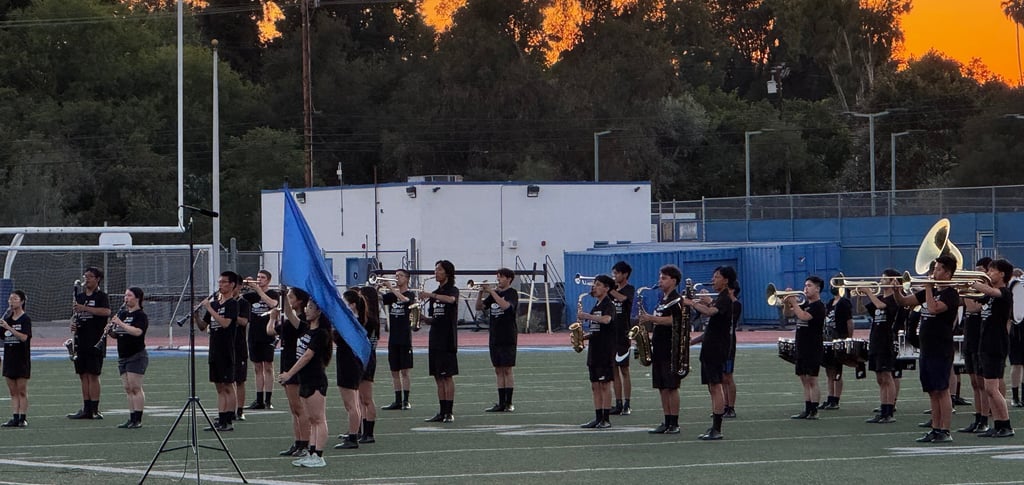
Color guard is a captivating performance art that merges dance, equipment movement, and visual storytelling. Often associated with marching bands and drum corps, color guard enhances the overall experience of the performance by contributing visual imagery through flags, rifles, and sabers. It requires both technical precision and creative expression, making it a unique and dynamic form of artistry.
The Mechanics of a Single Toss
One of the most visually striking elements of color guard is the toss. This action not only showcases the skill of the performer but also the physics behind the movement. When a guard member executes a single toss, they are effectively launching their equipment into the air, relying on principles of motion and gravity. The perfect toss requires a deep understanding of angles, force, and timing.
Understanding the Physics Behind the Toss
The toss can be broken down into several key physics concepts. First, the performer must apply force to the equipment, which creates an upward velocity. This force is a combination of the thrower’s strength, the angle of release, and the speed at which the item is propelled. In the case of a flag toss, the angle of release is particularly critical; a proper angle, typically 45 degrees, will enable the equipment to reach its maximum height while still allowing for a graceful return to the performer’s hands.
As the flag ascends, gravity begins to act upon it, pulling it back toward the ground. The performer must anticipate this gravitational pull to successfully catch the flag when it descends. This anticipation is developed through practice and muscle memory, ensuring that the guard member is ready to engage with the equipment upon its return to earth.
During the entire motion, the spiral of the flag (or any equipment) creates a rotation. This rotation is not just for visual appeal; it serves to stabilize the object in the air, allowing for a smooth and controlled toss. The symmetry of the toss is vital; an uneven release can lead to wobbly flight paths or, in worst-case scenarios, a dropped flag. The physics of motion ensures that the equilibrium is maintained, allowing for an impressive display of skill and coordination.
In conclusion, color guard is much more than just aesthetics; it is a profound example of how art intersects with science. By understanding the physics behind a single toss, performers can refine their techniques, amplify their artistry, and deliver breathtaking performances that resonate with audiences. Whether you are a seasoned performer or new to color guard, appreciating the underlying mechanics can enhance the overall experience and performance quality.